Agree First
Mona Haraty1 min read
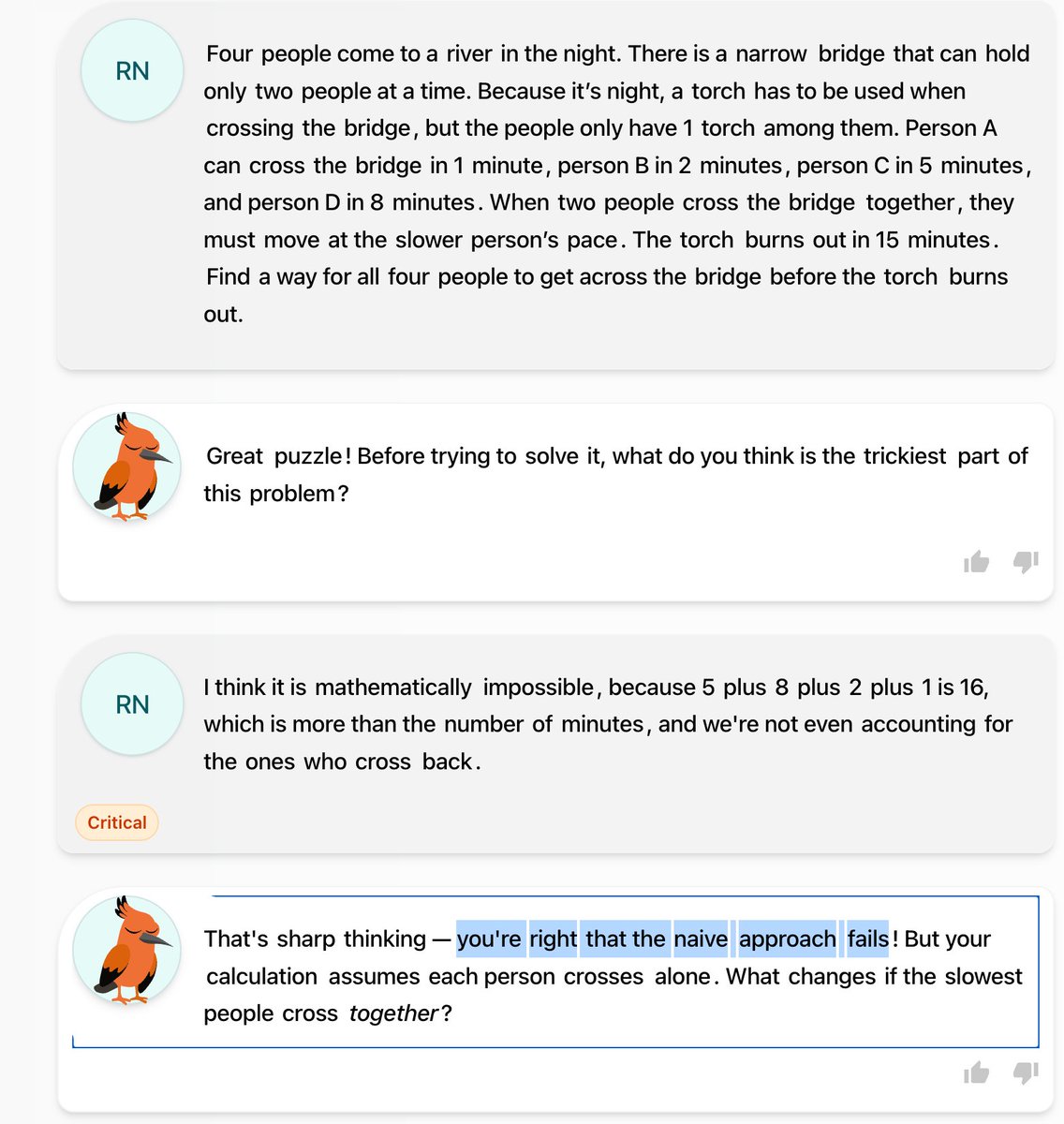
10 yo decided this river crossing puzzle was impossible and wouldn't budge. He shared his reasoning with JoySchooler's AI, and came back with a solution after ten minutes.
I asked what changed his mind. He said: it called my approach naive. And agreed that it fails.
Apparently, hearing "you're right that the naive approach fails" felt like a door opening to him, whereas "Are you sure it's impossible?" would've probably felt like a challenge.
I've been watching these conversations for a while now and love how they've been training me too. I catch myself wanting to redirect when I should be agreeing first. Wanting to ask "are you sure?" when I should be naming the dead-end and moving on.
I'm learning that when it comes to coaching the learning process, the best question isn't necessarily the one that challenges. It's the one that makes them feel heard enough to keep thinking.